2009-12-02: Taveuni


Courtney, her mom Nancy, and Rachel Z. came for a visit last week.
They arrived on Tuesday and left on Thursday morning. It was quite an
eventful visit as Wednesday was Vaitupu Day. This is the day they
celebrate their homeland, Vaitupu, and reflect on where they
originated. In Tuvalu, Vaitupu day is a celebration of paying off a
debt owed to foreign countries. The celebration follows the same
pattern as other festivities such as Sunset Day, Kioa Day, etc. The
chiefs and elders sit at the poles, eat quickly while the ladies sing
three songs, and then give random speeches about how everyone is going
to burn in hell unless they repent from their evil ways. There was a
competition fatele at the morning service but since only the elders
where in attendance it petered out rather quickly. The elder
drummer’s stamina isn’t quite at the same level as the youngsters.
Overall, it was a good experience for our visitors as they had the
chance to see the raw culture of the island and experience the joy of
their dance and song and the pain of their painfully long speeches and
processes.

The day following Vaitupu day we left early to Nakia Resort on
Taveuni. We dove Rainbow’s End and The Fish Factory and the
experience was phenomenal. The equipment was immaculately maintained
and most of it brand new. The boat was pristine with professional
service and constant attention to safety. In the 12 dives we had been
on prior to this one, never did we feel more confident in the
instructors and equipment.

The resort and it’s owners where even more impressive. Robin and Jim
Kelly have lived in Fiji for seven years and have operated Nakia for
two of those years. Jim is a lawyer from Northern California and has
since turned into quite the expert on alternative energies. His
self-taught study of these technologies has produced a complex system
of hydro, solar, and wind that powers their entire resort. He was
very hospitable with his time in walking me through how he set it all
up and the way in which the technologies harmonize to power the
facility. He even went so far as to print out about 30 pages of
research he had done to share with the islanders and help us in
starting our hydropower project.

The other rare thing about the resort was the way in which it blended
in with the environment. Even though the facilities where world class
and extremely comfortable, the natural beauty of Fiji still permeated
through the man made structures. Such a balance is indeed rare.

We had planned to leave that afternoon to the Matai area to stay at
budget backbacker’s lodge but Nancy was kind enough to let us to stay
in their bure. To make things even better, Robin also invited us for
a huge Thanksgiving feast that evening. This was an amazing
unexpected blessing and the food was better than most of the
Thanksgiving dinner’s I’ve had back home. We had ribs, turkey,
dressing, gravy, biscuits, fresh salad, beans, mashed potatoes, and
upside down passion fruit cake with ice cream. I would have never
thought such a combination of foods in Fiji was remotely possible. A
couple from Texas on their honeymoon, a Catholic priest from a nearby
church, and a couple from New Zealand also joined us for dinner. The
fellowship was hearty and warm and we will never forget the
hospitality offered us that day.

The next day we headed up to Lavena Lodge. This is a small four-room
lodge at the end of the road on the windward side of Taveuni. Since
this side of the island receives the blunt force of the trade winds
and thus rain, it is a lush tropical landscape complete with bountiful
rainforest, amazing beaches, and gushing waterfalls. There is a 5km
coastal walk from the lodge that follows the coastal line and then
turns up a large river to a cozy grouping of two large waterfalls.
Since it had rained heavily the night before we where unable to forge
the current up the channel to the waterfalls but could still gaze at
their beauty from afar. We will most definitely make a return trip in
the dry season to see their beauty up close. The story goes that
Return to the Blue Lagoon was filmed just around the point from the
lodge. We watched the movie just before leaving for Fiji and the
backdrop does resemble several of the scenes.

The next day we snorkeled at Waitabu Marine Park, and were blown away
by the amount and variety of fish we saw. Lonely Planet’s description
of this park does not do it justice. This is by far the best
snorkeling we’ve experienced, and the water clarity is well over 70
feet if not 100. The local guide was very friendly and informative
and helped point out the major features of the park. We were amazed
that just 11 years ago the fish and coral where decimated from the
1998 El Nino, and now the area was a lush haven for fish and coral
alike. Seeing the ability of Mother Nature to recover from a natural
disaster first hand was humbling and inspiring.

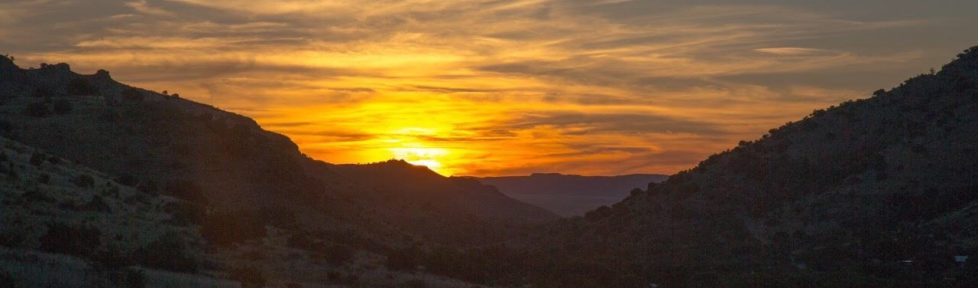
That night we walked the beach and enjoyed a spectacular sunset. Our
village is situated where we miss both the sunrise and sunset so these
where special treats. A group of children must have thought we looked
lonely and decided it would be fun to tag along. I was kind of mad at
first that they spoiled our moment alone, but it is hard to stay mad
at Fijian kids too long. They really are a lot of fun and when they
flash their pearly whites at you the heart has no chance but to melt.
We enjoyed the sunset over the blue lagoon bay while perched on a few
rocks at the point. As we were about to leave one of the kids pointed
at the cracks between the rocks and yelled. I looked down, and
between the rocks at my feet was coiled a rather large sea snake.
These are the most poisonous snakes in the world. Thankfully they are
pretty timid and their mouths are very small so their threat to humans
is relatively small, so I’ve heard. I’ve also heard that several
other snakes are ‘the most poisonous in the world’ but haven’t taken
the time to actually verify any of the claims. Anyway, it was quite
unnerving to see any snake below my feet regardless of their poison
content so I quickly skedaddled outta there!

2009-12-07: Smoke ’em if ya got ’em


An interesting observation about Fiji:  It is completely acceptable to eat your body weight in Dalo and Cassava four times a day, drink grog for 18 hours straight until you cant walk, and smoke 35 cigarettes a day.  But the minute anyone talks about drinking the party is over.  I feel like I'm back in the bible belt.  Woo hoo!!  I knew those Baptist roots would come in handy some day.

006TIASmokingSantasm
 

Kelly Update – November 30, 2009


I CAN NOT BELIEVE IT IS DECEMBER! We just finished a workshop in Labasa, celebrated Vaitupu Day in Kioa, headed to Taveuni for Thanksgiving and Matt's 32 birthday and now I am in the big city of Suva for peer support training. (Matt is back in Kioa … it is the first time we have been apart in 6.5 months, seriously EVERY MEAL has been together!! And I miss him already!)

All the shops have Christmas stuff out and the only thing on the radio is Christmas carols. It feels a little weird to hear songs about snow, fireplaces, and santa when I am sweating my brains out!! I thought for sure they would adapt Santa to wear a sulu and bula shirt in this climate but I guess they prefer the wintry look??? Mind over matter???

It is hard to be away from you this holiday season. We love you and think about you daily! ~Kelly

Lessons Learned
Are you waiting on God … or is He waiting on you?
It is easy to see God's power in the rain, but hearing that power on your tin roof will make you hit your knees!
If you put a bar of soap on the bed the bed bugs will be attracted to it.
My happiness is nothing unless it lines up with His holiness.
Waterfalls sound like traffic.

Kelly Roy
gigglepic.com
vaportrail.typepad.com
mobile 011.679.937.5958

visit us online @http://www.kioaisland.org

2009_1130PC27

2009_1130PC32

2009_1130PC67

HOT SHOWERS!!!

2009_1130PC70

Jim and Robin Kelly invited us for Thanksgiving dinner at http://www.nakiafiji.com/ !!! TOP NOTCH diving, bures, and FOOD!!!

2009_1130PC143

2009_1130PC167
      

2009-11-17: Labasa Town


It is often hard to hear the word Labasa without the ‘town’ following it. I had always thought
this a little curious until we arrived Sunday for a four day workshop. But before describing this unique nook of Fiji it is perhaps more appropriate to describe what it took to get here.

We left the island shores about 9 am and enjoyed an amazingly calm boat ride to Buca Bay. From there we waited about an hour for the ferry bus to arrive which takes people from the Taveuni ferry through Savusavu and on into Labasa. I was looking forward to this trip because the bus is a ‘fancy’ Fijian bus with real windows and enough headroom to not worry about concussions from overhanging dalo bags. I was also hopeful of enjoying the technological improvements of bus suspension systems since the 1960’s for this bus is much newer model compared to the old school open sided variety seen throughout most of the greater Fijian metropolis.

As we approached the shiny chariot my expectations dampened a little when I noticed the words “Black Virus” painted across the front windshields. Seriously, what the hell does this mean and why would anyone in their right mind paint this on front of a perfectly good bus? I just don’t get it. 

We waited for the ferry passengers to load as they had first dibs since they had already endured a 2 hour ferry ride on a wooden boat from Taveuni that Peace Corps says is much safer than a fibre boat even though it looks like it was built from Noah’s scrap lumber pile and has absolutely no cargo/passenger loading standards or requirements.

Since we were the last group to load the large bags went below deck, which actually had cargo doors that closed compared to the open variety of the old buses and we found a spot way in the back. The bus wasn’t too terribly crowded and some unscrupulous passengers took advantage and gobbled up three person seats making it look like they where waiting for someone with their bags spread out. Once we were on the move they laid down for a nap while others where scrunched in like sardines in the very small two person seats. 

The ride improvement was sadly nominal. Although I was glad to see this driver was more courteous than most and didn’t try to run people off the road with his ‘black virus’. 

We found that being stuck in the back of the bus is bad for two reasons. One, you get the full impact of every bump in the road, and two, the dust pours in from the windows. Up front is much smoother but if you are on the isle you get a nice pounding from passing butts and dangling cargo as it passes on and off at each stop. I don’t know which is worse.

After 2.5 hours we arrived in Savusavu for a quick pit stop. We then ventured on to Lambasa for another 2.5 hours. I had heard the scenery on this trip is astounding and was looking forward to the change in scenery as the trip from Buca Bay isn’t much to write home about. Unfortunately a thick fog and slow drizzle immediately engulfed us as we left Savusavu and didn’t depart until we had crested the ridge well past the views across deep valleys. 

It is quite startling the contrast between southern Vanua Levu and northern. The lush virgin vegetation is quickly replaced with pine forest and clear cut cane fields almost immediately as we crossed the ridge. Smoke fills the air from farmers clearing plots and the dryness of the air gave me more of a feeling I was in West Texas or New Mexico.

2009-11-14


As a follow up to yesterday’s entry, today while finishing up my study of Hebrews I read the following passages; Hebrews 13:9 “…for it is good for the heart to be strengthened by grace…” and again in Hebrews 13:13, “Therefore let us go to him outside the camp and bear the reproach endured.”

2009-11-13: Bucket Stove Part Two


We removed the form two days ago and I am happy to report that the stove might turn out to be a winner. I was worried that the bucket sides had expanded too much and would have wedged the now curing concrete permanently into a breakfast cracker bucket tomb. O.k., another rabbit trail opportunity about concrete. Don’t ever say concrete is drying or has dried. If it did that it would crumble to tiny
bits of aggregate. Concrete ‘cures’ or ‘hydrates’. If fact, some argue it never stops curing and gets harder and harder as time goes on.   

To remove the concrete I first chipped away the thin layer around the edge of the bucket and pried it back a bit with a screwdriver. This worked a little but began cracking the bucket. As I maneuvered around the form my senses were Samalu and a few suspicious bystanders had money on me never getting the thing out. But thankfully I remembered the trick my dad showed me with a welding torch when we popped the flywheel off the clutch plate of my 68 Ford F100. Things that heat up expand. So, I poured hot water over the bucket and the stove slid right out. 

I then quickly realized my Aggie engineering had overlooked an important step. I forgot to mark the side of the stove body where the entrance to the fire chamber was. So I started on the top of the stove, formerly bottom of the bucket. Since the egg carton had floated, the top of the fire chamber was now 3-4” below the top of the stove. The concrete was still curing so chipping away wasn’t too difficult. I finally found the carton and chipped away the top opening to match the diameter of the void within the concrete body. 

The next step was finding the entrance to the fire shaft on the side of the bucket. I lightly tapped the concrete around the stove sides and found the void. The concrete was very thin so that part was easy, but digging the egg carton out was more difficult with the nails. After about two hours the carton was free and most of the nails where still solidly in place forming a nice shelf for the firewood. We set the stove aside to let cure. It is best to wait at least 7 days before firing it up and ideal to wait 28 days as this is the magical day concrete fully cures.

Prototype #2 will use PVC pipe as the chamber and I will sacrifice a bucket to make a firmer form. I don’t think the islander’s have the patience to carve out an egg crate from a concrete bucket and the PVC will create more uniform shaft walls hopefully increasing the vacuum effect of the air. More to come on this exciting topic!

I was hesitant to post anything about the following subject and may still not put this up. However, it is such an important topic and essential that other volunteers and future volunteers are aware absolutely anything can happen anywhere. So I had to at least collect my thoughts to be able to tell others about it in some form or fashion.

Last Friday night there was a rape in the village. The incident was reported to Samalu on Monday morning, the island council convened an emergency meeting Tuesday, and decided to report it to the authorities at the nearest police post. We were very relived they decided to let current rule of law, no matter how fragile it is, run its course with the situation rather than taking justice into their own hands. We’ve heard that is sometimes the case in small villages. 

The authorities came Wednesday and began their investigation. The suspect was taken away Wednesday. 

The hardest part of the situation is the two families impacted are close relatives as the victim was first cousin to the suspect. We saw the suspect daily, as he was our neighbor, and he always had a smile and was willing to help in any way. His family is one of the friendliest on the island and often brings us fresh fruit and vegetables. The victim’s family is also very kind and we have loved getting to know the father, who is a council member. It all opened my eyes to the fact that even though we live on an island that often reminds me more of Mayberry than the South Pacific, anything can happen at any time. We constantly struggle to maintain the delicate battle of balance between cold suspicion and warm acceptance. It is something that can drive a person crazy because just when the guard is dropped, something happens. We see this all the time when away from the island. People are constantly trying to rip us off.

Although we know we are targets and have been trained six ways from Sunday on how to avoid being a victim, it is frankly hard to be constant alert to the intricate schemes people develop to take advantage of you when you are programmed internally to be serving them. This makes the times when you do get swindled much more painful as we are in their country sacrificing a major chunk of our life away from family and friends and all these bozos care about doing is ripping us off. 

Thankfully we haven’t been victimized on the island yet, and feel very safe here even with the most recent incident. Our guard has naturally heightened, though, as even before this we still followed the basic tenants of wise awareness. It is just altogether sad, and a hard scenario to prepare for. 

That’s the battle a volunteer faces and it isn’t something often considered when signing up. For those thinking about taking the plunge into international service, be prepared to serve people who don’t want to be served and often want to inflict justice upon you of a perceived wrong they have received from someone else of the same skin color. Also be prepared for inconceivable tragedies, often much more troublesome than the one we are experiencing.

Through all this we are learning to take events in stride knowing it only develops our character a little deeper each time and helps us realize small fractions of what the ultimate Servant had to experience so we could really experience a fulfilling life.

2009-11-09: Bucket Stove Part One


Today I built my first rocket stove prototype. I’ve been pondering it since training when Joe Otts displayed his rocket stove. It is really an ingeniously simple design and there is much posted on
the web about it. My main dilemma has been finding a simple and inexpensive design. After several iterations of sketches I landed on using the infamous Fijian breakfast cracker bucket and egg cartons. Since everyone I have met in Fiji eats breakfast crackers and eggs I knew I couldn’t go wrong. 

I started the stove by forming an “L” shape from two egg cartons. I wrapped the L in duct tape and inserted 3” nails into the short leg of the L halving it. This will later form the platform to hold the wood and allow air to circulate below the wood and up the fire shaft. The fire shaft formed the longer section of the L and rested on the bottom of the bucket. There is about a 2.25” gap surrounding the L on the sides and a 4” gap at the bottom of the stove, or top of the bucket. The bottom of the bucket will be the top of the stove when completed.

Samalu let me use left over cement from the water tank project and some old wire mesh he had lying around. We sifted some beach sand and mixed the cement with half sand and half concrete. 

By the way, here is a short diatribe on concrete vs. cement. If you have ever confused the two around anyone that’s been in the construction industry for more than two weeks I’m sure you already know the difference as he quickly reprimanded you. I can still distinctly remember the time I called a concrete truck a ‘cement’ truck two days into my first internship on the Baylor Student Life Center Project and was verbally abused as if I had asked a Baptist preacher’s daughter to dance and drink a beer at the same time. Cement is the gray powder used to mix with sand, water, and aggregate. Concrete is the combination of the ingredients. It is much like flour is to bread. So don’t call a sidewalk a cement sidewalk or a gray block a cement block. They are concrete. 

Ok, back to the rocket, or in my case, bucket stove. Once the concrete was ready, I placed the mesh reinforcing and poured a bit into the bucket. I then placed the L shaped stove chamber and slowly filled the bucket around it. It went relatively good except for two major incidents. The first one was the chamber started floating. I shoved it back down but had to be careful not to crush the egg cartons. The second problem was I ran out of concrete. This was a stupid mistake but luckily we had enough cement left over and Samalu whipped up a quick batch. After topping off the bucket the chamber still wanted to float to the top so we placed a large rock on top and this seemed to do the trick. In the end the egg carton was probably not the best choice. My aim was to find a form that was cheap and easily removable. Wood would have required two pours, screws, and a carpenter with a skill saw. PVC would have worked best but I couldn’t find the right size lying around and didn’t want to purchase any as it would have defeated the purpose of my main objective of creating a cheap stove. Next time I might try
making a form from multiple layers of strong cardboard. I should no more tomorrow when we pop
the stove out of the bucket and see if everything held together.


2009-11-07


It has been four days since journaling and frankly that is way to long. It seems like so much has happened and yet so little at the same time. We are officially deep into island fever with no cure in sight. Well, a slight move towards a healing occurred today. We took advantage of the beautiful breezy day and low tide timing to go for a snorkel near the island’s community property west of the village.  

It started off very cloudy with a massive amount of light tan soft coral whipping around in the rough currents. Last time we dove east of the village near bat island and went out as the tide was coming in.  This time I wanted to see if the clarity would be better with the tide going out. It wasn’t much better,
and almost worse. However, when the tide is going out, the main current is pushing in which helps. Due to the high wind, though, the current was pretty much all over the place.

After about 10 minutes we made the bend and the coral opened up into several table top formations and large canyons with small caves. The fish where mostly of the smaller variety and types we had seen before. We did see several large sea cucumbers, a large clam, and crown of thorns. It was our first sighting of the deadly crown of thorns and I was glad we had only seen one. Multiple sightings are a sign of unbalanced nitrogen in the water, which kills of the predator of the prickly pests. They eat coral, which in turns makes the water chemistry even more unbalanced eventually leading to a bad
situation. Of course, I am no where near a marine biologists, I have just read a lot about coral health from PC training. 

After about an hour of snorkeling we sun dried and headed back to the fale. A gaggle of tamalikis, small children, welcomed us home as they frolicked around the hammock in our back yard.

There’s good news on the garden front. After the overhaul I am proud to report good progress with long bean, Chinese cabbage, sweet basil, and cucumber. The papaya factory is in full swing as I have approximately 20 seedlings struggling to the 5 inch mark and several more sprouting amongst the several holes I’ve pounded through rock around our compound. When they all mature we very well may have a papaya forest. That would make our fiber deficient starved bowls very happy. 

Our neighbor, Fani, had a group of kids bring us a wheel barrow full of rich dark soil today. I have never been so excited to see black soil. The soil around our house isn’t that fertile and full of rocks. I immediately transferred it around the fledgling papaya and made several more nursery pods from used oil bottles and soup cans. I placed the rest around the garden produce to encourage their steady upward pace.