Taveuni from Matagi Point
Taveunui at Sunrise
The tip of Vanua Levu with Taveuni in the background
Buca Bay with Vanua Levu in background
Salia Village
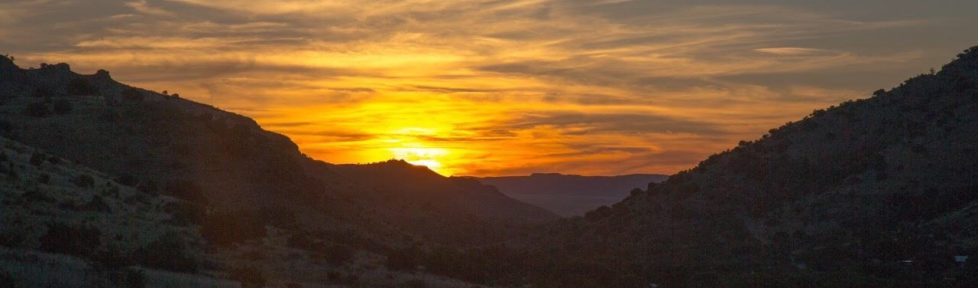
Taveuni from Matagi Point
Taveunui at Sunrise
The tip of Vanua Levu with Taveuni in the background
Buca Bay with Vanua Levu in background
Salia Village
Finally, no more Valentines Day. It took 6,000 miles of travel, but I have finally found a place that doesnÂ’t give a rip about the greeting card holiday. I am about ¾ finished with this mysterious holiday and nobody has wished me a happy Valentine’s Day, given me a cheesy card, or worn pink. Well, Bale, my 10-year-old neighbor boy, did have pink camo shorts on today, but I donÂ’t think he meant anything by it.
I am back on the island after a trip to Suva. Kelly is doing a work exchange with another volunteer so she hasn’t made it back home yet. So far it has been pretty relaxing. The hurricane pounding Tonga has produced a lot of cool Southerly wind that we haven’t seen since September. It almost feels like the ‘dry’ season again. I just hope the storm doesn’t turn Westward, it looks nasty.
So more Canadians showed up yesterday and I have been touring them around the island a bit. Two of them are farmers and were very interested in the farms around the island. I was surprised how much I had remembered from my trips through the bush with Papa and things IÂ’ve picked up from other villagers here and there. It felt good showing off the island to people truly interested in how these folks live.
After the hike I wanted to take advantage of the cool weather and make a trip to a hill overlooking Bat Island. ItÂ’s a beauty of a view and would be a great point to catch the sunrise early in the morning, if I could ever motivate myself to get up and make the hike. The timing has to be just right, though, as you canÂ’t reach it in high tide very easily and there are often clouds in the eastern skies.
On my way, Bale, Vailua, Taapo, and Josiah decided to tag along. I was glad as tamalikis always make any hike more enjoyable. They taught me how to eat the tanu, which is young coconut sprouting from the ground. It tastes like a coconut sponge. We then learned how to slide down hills on coconut palms. After that we hiked up a steep incline through a cassava plantation to the crest of the hill. I was kinda thinking I would loose the gang, as it was a hard climb in the hot sun. Nope, they scampered up barefoot leaving me in their tracks. These kids definitely donÂ’t have an obesity problem with all the playing and running around they do.
When we reached the top of the barren hill I was hoping for a little alone time to reflect on the amazing view. I thought for sure theyÂ’d head back down for shade. Nope, they simply tucked under some Cassava plants and enjoyed the view as well. On the way back they picked some green mango and ate them along the way.
There is a lot to be said about the type of lessons children learn in an environment like this. Sure their formal education isnÂ’t the greatest in the world, but their education in life cannot be matched. I never met more polite, outgoing, happy, and accommodating children as those here and hope as the western influence grows in Fiji their rearing is complimentary to the new things they will learn.
Being a Peace Corps volunteer is a lot like driving an Indy Car in rush hour traffic all the time, not just some of the time, all the time. As US Citizens we are trained at an early age to go full bore and not let up. It is engrained in our brains from day one and it hasn’t been until Generation Z^3 (or whatever we are currently at) that people have started rebelling against this hair on fire mentality. My profession prior to joining the Peace Corps as a project manager in the construction industry didn’t bode well for avoiding this pattern of existence. In fact, there where times where I simply couldn’t turn it off. Hence the need for a segue to Europe for graduate study as a breather. But even the degree I compacted to 12 months.
So here I am in the South Pacific, probably one of the slowest moving areas of the world, about to go crazy and wondering why? Is it the incessant heat that makes my earlobes sweat? What about the hurricanes and random tsunami warnings that never seem to happen? Maybe it is the three-pound rats that gallivant around my house rafters dodging mosquitoes and roaches the size of Buicks as if playing a strange version of critter tag? O.k., it has to be the stomach-revolt after every community meal. That’s it. Well, although all the above is quite fun and jolly; it isn’t the real reason of my angst.
It hit me today whilst sitting in a community meeting wondering if I will ever pick up this amazingly simple language. I’m an Indy Car living in a Go-Cart world. I don’t say this analogy condescendingly. In fact my love for Go-Carts is much deeper than Indy Cars. It is simply the best way to describe life transition from developed world to undeveloped world. I’m like an Indy Car constantly stuck in rush hour traffic. It is very frustrating, as I know I have the horsepower to get where I want to go in no time flat. My tires are new, my engine recently tuned, and my fuel is the best in the world. All the gauges are top of the line and give me all the information I could every need about the car’s status. I have the best technicians available at a moments notice to fix any problem that arises. Instead of being able to utilize all that is at my fingertips and tap into the experience of thousands of laps in this world class machine I am instead stuck breathing fumes from a 1986 Buick Roadmaster while watching the guy next to me pick his nose while flipping through AM talk radio stations.
Why can’t I go anywhere? My engine is overheating from all this idling! I don’t even need this titanium visor with carbon fiber lining as my top speed has been 4.5 mph! Why don’t all these yahoo’s get the hell outta the way!! Blahhhhh!
O.k, I am a recovering road rager, but the point is made. That is what it is like here. I want to go but I can’t. So I idle and my brain starts shutting down. I slowly become apathetic and lazy. I embrace the pace and can’t seem to function any longer. It is as if I have only one speed and anything lower yields nothing to negative results. That is how it is and overcoming it is not easy. I came in thinking it was, but it isn’t. It is the hardest thing I’ve ever had to do.
All is not lost though. As even though I’m not going anywhere fast, I can still rev the engine and feel the rumble every once in a while. That is what happened today. Kelly and I were able to present at the community meeting and it actually felt really good. The villagers received the message well and even asked a few questions. For the first time it felt like a true connection was made that will increase their capacity to do things they may necessarily not have been able to do without us there. It made me realize getting through traffic the fastest isn’t always the best end game. Instead, making the most of it while I’m there knowing the destination isn’t moving and in fact the journey is often the most enjoyable part anyway.
One of our dearest friends died of a heart attack last night. Vovo was a man of few words (unlike most islanders!) but those he spoke were always wise, funny or both. Just yesterday he greeted me on the path to the maneapa and said how glad he was that I was home from Suva. I thought how wonderful to be missed but then he said, "Every night I pass by your fale and hear Mataio crying. He missed his avaga and I had to hold him." But most of all, he was our biggest supporter on the island. No matter what Mataio invented, whether it was a rocket stove made in a cracker bucket or a Fijian Flip Flopper upside down planter made of an old bag. Vovo always said he thought it would work. I can't imagine going to the Council office on Monday knowing he won't be there, but I do know he will always be a part of our Kioa.
Tofa Vovo…
Samalu and Vovo inspecting the rocket stove.
Tupata and Vovo, referees spectacular, at the last Te Ano games.
Interesting observations whilst traveling around Fiji:
high security
there are really too many comments to "list"…
Today we traveled to the swampy area of the island called Teumanga for the third hydro observation. This area is within a reasonable hike from the island and was once home to most of the dalo crops. The farmers have since let it go and weeds and pulaka plants dominate the landscape. There was a recent exhortation from the elders to encourage the youth to weed it and clear out the water channels to make it suitable once again for dalo planting.
So on this trip Lau Pula, one of the chief’s sons, went with us to do just that. Papa had a laundry list of alternative tasks as well. The mouth of the swamps is a thick Mangrove forest and is most easily accessible during hide tide. We traveled a quarter mile in the fibre through the forest and disembarked for another half-mile hike through the water to the main area of the base of the swamps. Here Papa showed me the headwaters of the swamp drainage point and the flow was minimal but impressive considering the lack of proper drainage channels and dry weather we’ve had for some time. The problems with this source were the head and water clarity. There is a ton of mud and measures would have to be added to the system to filter it before using for hydro or drinking purposes. It is close to the island, though, and if the farmers get serious about clearing the area it may turn into a viable site.
We left Lau Pula to his dalo planting and headed back to the fibre for a trip to Vaimoana. The agriculture councilor, Tavita, has his block here and it is the home to the islands only waterfall. I use waterfall liberally as it is really just a large rapid, but beautiful nonetheless.
Vaimona is the exit point for the Sakea River and it is the largest open fresh water source on the island. A half-mile trip in the fibre through a mangrove forest got us to the boat landing. Papa wasn’t very familiar with the area so it took quite a bit of hacking our way through chest high weeds to find a path. When we reached the falls I was impressed at the flow but disappointed with the head. It is also very far from the village making transmission a problem. David advised Papa there was another fall further up the creek so we made our way into the interior. The going was quite rough as it had rained that morning and we never really found a trail. We stopped for a breather and caught a glimpse of two large birds resembling parrots. I have heard the island is known for its bird population and houses some rare species. I’m not much of a bird guy, other than for consumption, so I haven’t really done the research to know.
After the break we walked on and made our way further into the bush. We never found the other fall and the water levels quickly dropped the further we increased in elevation. We had a quick lunch and headed back to the boat. At this point I was pretty zonked and wasn’t really paying attention to my surroundings. This all changed quickly when I felt a sharp sting on my knee.
I looked down and noticed a yellow hornet, then another, then another… It wasn’t looking good. Unfortunately I yelled a few explicatives, and threw my cane knife as I wildly tried to kill the flying demons. Papa calmly told me to stop moving as I cringed from the three stings on my legs and one on my forehead. As soon as I stopped moving they left and returned to their hive nearby. Papa whacked it a few times with his knife and we slowly walked away. I had been stung by a couple of months ago so I wasn’t worried that much about swelling. He said if I had froze after the first bite they would have left me alone. Apparently they only attack in groups if the victim acts like a circus clown on speed. Well, he didn’t quite say that but I know he was thinking it. I thanked him for the tip, although a little ill timed.
We made the remainder of the hike loosing the trail a few times and finally reached the boat soaked in sweat and rain. Although the survey didn’t turn up much hopeful information it was nonetheless a productive trip. I’m always amazed about how much I learn from a trip in the bush with islanders and a machete.
The holidays are over and most of the family visitors have left. School started and things are returning to ‘normal’. This means we can get back to business with some of the ongoing projects. Papa and I haven’t heard back from any of the NGO’s we contacted last year regarding a proper feasibility study of the island’s hydro potential. Regardless, we are still surveying the known water sources so at least we can show them data before they arrive. Showing serious intent is the first step in convincing them the village is committed to contributing to the project and they aren’t just looking for another handout.
We walked to Sakea creek, which is in the interior of the island. This is the main creek that feeds the largest river. The problem is this creek flows away from the village and is quite a hike just to the headwaters. Papa brought along Joe and his hunting dogs in hopes to spot a wild pig on the way. Although the dogs didn’t pick up a trail during our hike it was good seeing them put to good use for once. They actually obeyed his commands and didn’t fight each other like rabid monkeys, which is typically their normal activities in the village.
I have learned no major trip is done on the island without a few secondary objectives. For example when we went to cut the wood for my paopao Papa also collected firewood, mature coconut nuts, and brought a few of his family members along to take back beddings from his house in the bush. On this trip Joe was hunting and stopped off at the end to weed his grog plantation.
When we arrived at the creek we walked along several points looking for a sign of good flow at a reasonably high elevation. Jim Kelly at Nakia Resort on Taveuni gave me information on hydro that states a good base of site conditions to start with on any hydro project are 10 litres per second of flow and 50 meters of head (fall from collection point to turbine). We found the head on our last trip but not near enough flow. Here, both were disappointing.
The trip wasn’t a complete waste, though, as we walked a bit further to the ‘red sands’ area in the middle of the island. As we approached the ground became thick with fern like vegetation and small trees that resembled franchipani with pine needles instead of leaves and flowers. We walked up a ridge and found a barren landscape of rolling red mounds. The hills were a mix between sand dunes and walls of dry creek beds. The sand was hard packed on the ridges and sides but loose and deep at the basins. It was somewhat eerie looking over the landscape at the lush vegetation and ocean beyond with the lifeless dirt mounds in the foreground. It was blazing hot so we didn’t stick around long and soon made our way back to the village via the coastline. Even though the hike was only 6 miles it was amazing to see the diversity in landscapes along the way.
Everyone knows somebody who is consistently stating the obvious. Most people will do it time to time, but there are those with a special talent at maintaining a constant focus on verbalizing all that is happening around them even if it isn’t necessary. Those people would be masterful artisans of Fijian conversation etiquette and probably elected to a high office, if there were elections here.
At first I found it a little strange, but I didn’t dwell too much on it. It does help in learning the language, though, as I always have something to say even if it doesn’t communicate much to the other person. For example, it is standard practice when walking past someone in the village to say you are, “walking this way.” A common variation is, “I am coming from over there.” For the minimalist it is often shortened to, “I am walking.”
I don’t know if this newfound skill will transfer back home. I may spend the first year annoying the hell out of everyone around me until I can regain normal conversation skills. This is the end of the blog.
Here is the video I referenced in my earlier blog about our Christmas trip to Taveuni. Amazing beauty...Download Waterfall
Talofa!!
I hope you are settling into your new year. We are back to work yet trying to do a little as possible in the heat. It is 95 degrees, 100% humidity, no breeze, and no water. We have been without water for 4 days, but praise God it rained last night so we could shower today!! Woot! I apologize for not taking many photographs. My favorite lens fell victim to the humidity and had to spend a little quality time at the Canon Service Center (Thanks Dad!). We love you and miss you!! ~ Keli & Mataio
Lessons Learned
If I don't dry off after a shower than I can trick myself into thinking it isn't sweat 3 minutes later.
I can live on 1 bucket of water a day … albeit not pleasantly.
Is it more important to be right or righteous?
Yes there are many, many ways to cook rice but none of them taste like cheese.
Kelly Roy
gigglepic.com
vaportrail.typepad.com
mobile 011.679.937.5958
visit us online @ http://www.kioaisland.org/
Mataio about to take his paopao out for a spin! It was low tide so he had to walk it out a bit.
YEAH!! It floats! Of course it might be the mandatory PFD … we can get sent home if we don't wear it at all times in the water.
No fish … guess it will be ramen for dinner …
Mataio's biggest fans.
Apparently you have to catch a fish before it is an official paopao – so Papa had to do the honors! ;o)
And finally, this is me showing you how sweaty I am … each and every day all day!
 Vapor Trail